

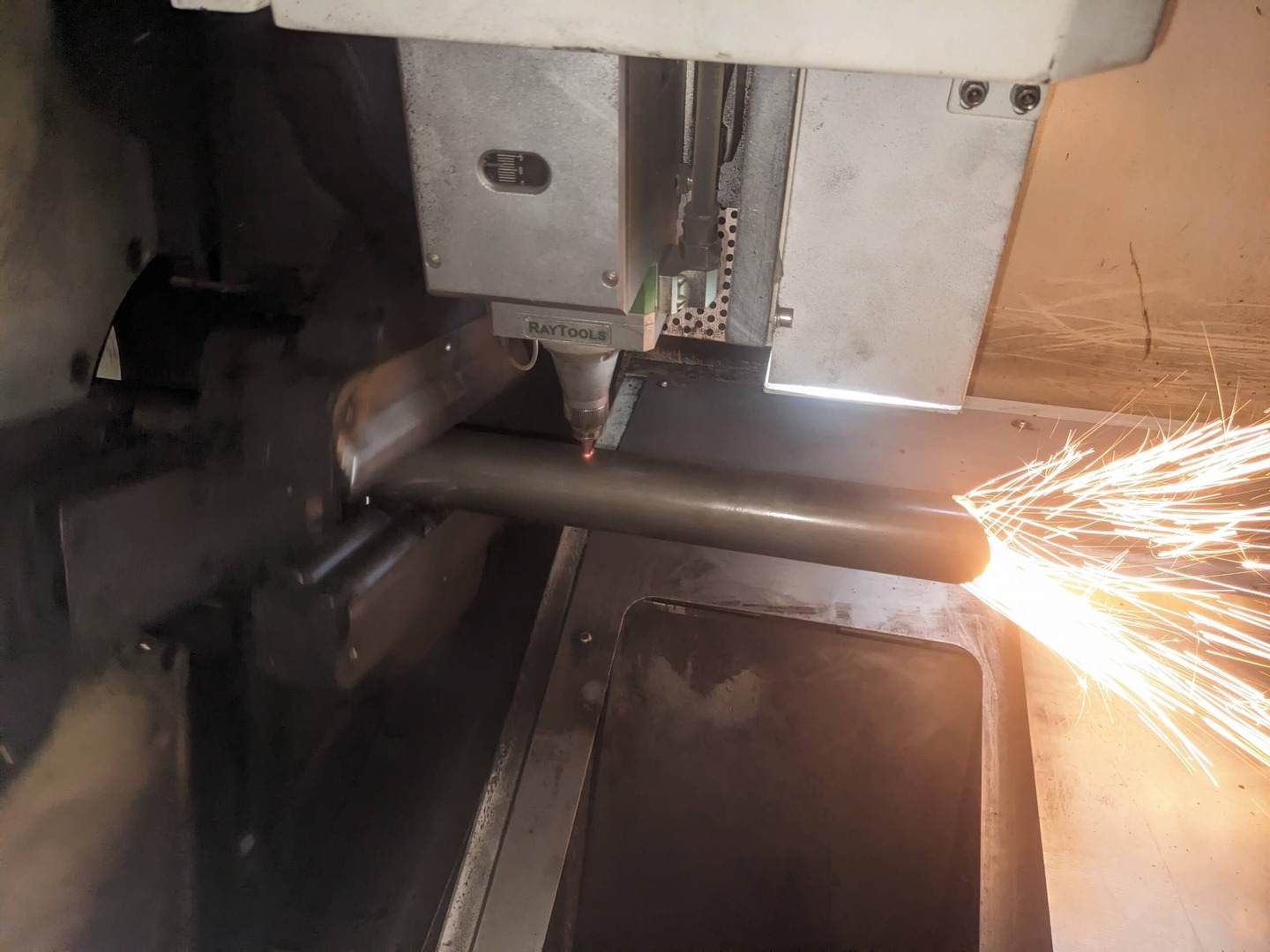
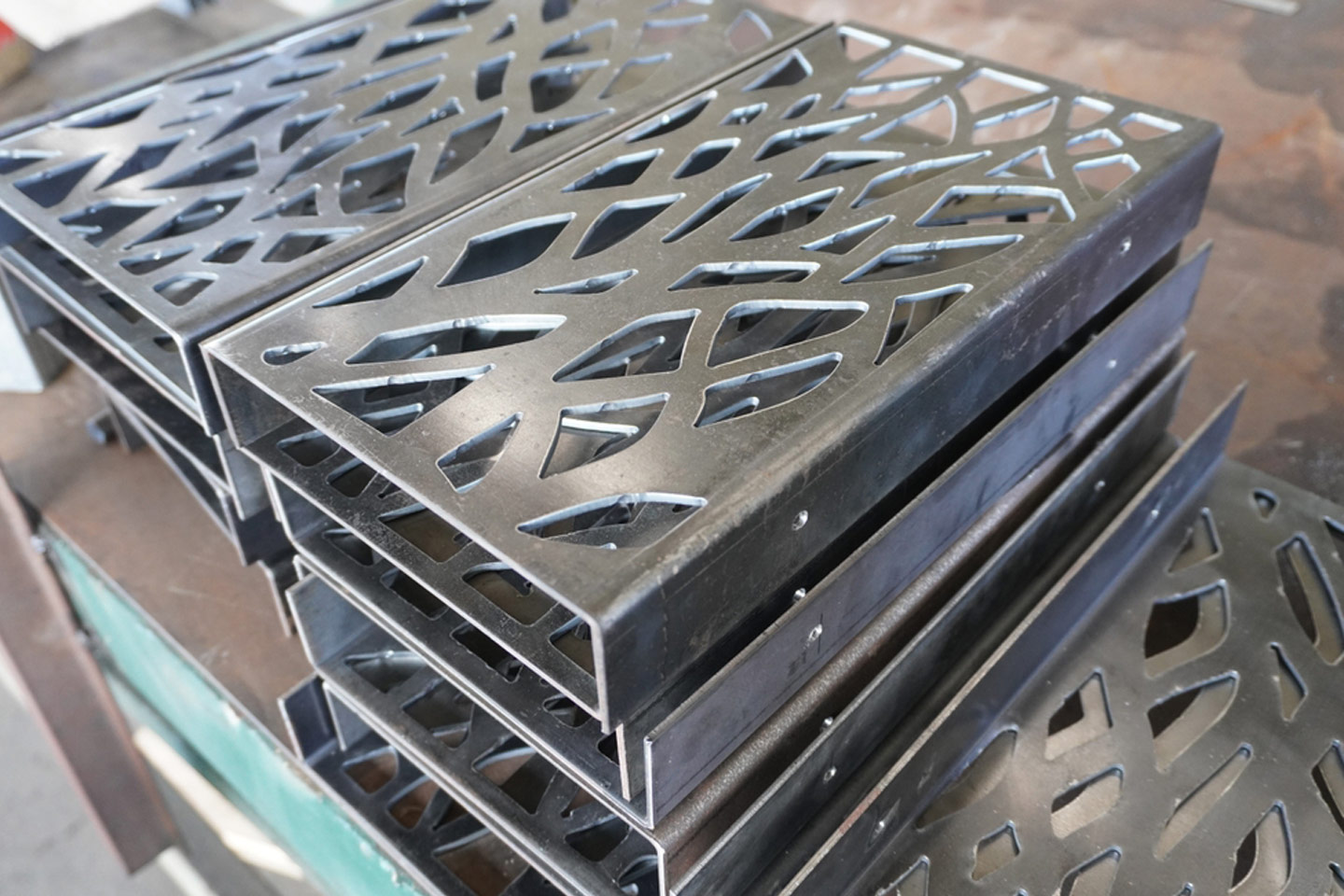

A laser cutter is an important piece of equipment at Seaborn Manufacturing, where precision and efficiency drive everything we do. The principle of focused energy is at the center of a lazer cutter. These machines produce a beam that is focused to a very tiny point and release enough heat to melt material along a specified line. A nozzle delivers assist gas like nitrogen or oxygen to blow the molten material away, leaving behind a smooth and accurate cut line. This allows us to cut detailed profiles and fine features without physically touching the material. That’s a major advantage when precision and surface finish matter.
Lazer Cut Technology for Faster, Cleaner Fabrication
Modern lazer cut machines come in different configurations, including CO2 and fiber systems. Many advanced fabrication shops today rely on fiber lasers for their speed and ability to cut reflective materials like stainless steel and aluminum. At Seaborn Manufacturing, we use advanced laser cutting systems that are computer-controlled and CAD-integrated. This computer control ensures that every part is cut precisely to the drawing, with minimal variation from part to part (even in large series runs).
The lazer cutting process begins with the design of the part. We take the drawing or 3D model and instruct the laser cutter to move along the precise path required. The software also performs nesting, that is, the process of laying out parts on a sheet to reduce waste. Good nesting greatly minimizes scrap rates and assists in managing material costs, particularly on high-production jobs. When the file is complete, the machine adjusts focus, beam intensity, and cutting rate by material type and thickness automatically.
Thickness and material type influence the cutting approach. Mild steel, for instance, may be cut using oxygen to assist in burning through the metal. Stainless steel and aluminum, however, tend to employ nitrogen as the assist gas to avoid oxidation. Advanced laser cutters are highly effective throughout these types of material and can produce clean, burr-free edges even on fairly thick sheets. Another benefit is speed. Compared to older approaches such as sawing or plasma cutting, lazer cutting provides significantly shorter cycle times for thin to medium gauge materials. This speed, coupled with less post-processing, results in our ability to complete jobs in less time and proceed on to the next phase, be that forming, welding, or final assembly.
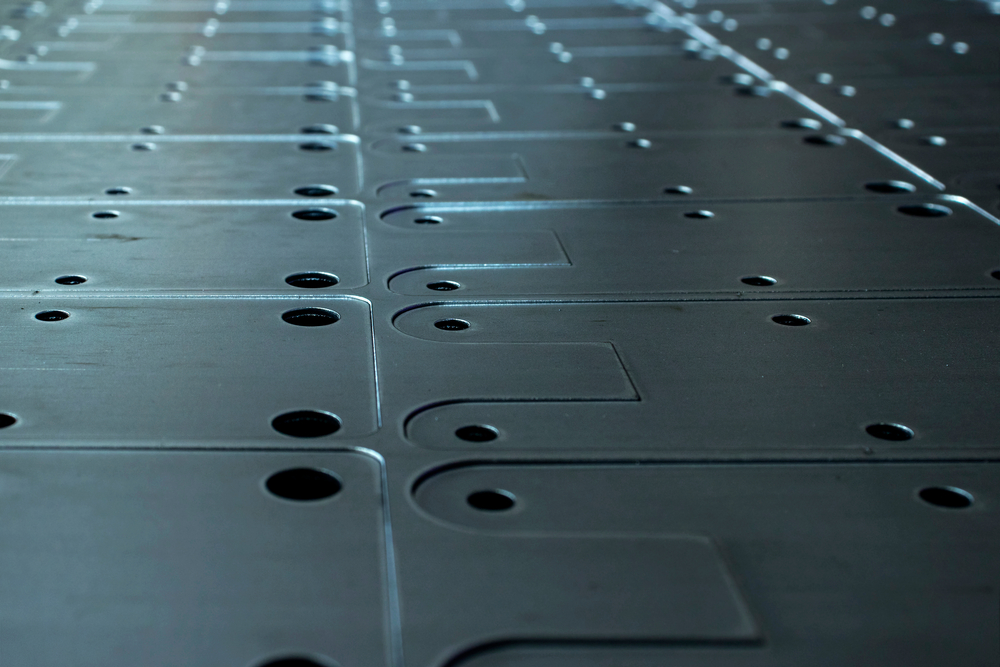
Parts cut using lazer cutting are also far simpler to work with downstream. Because edges are tidy and measurements are precise, fabricators will not have to allocate additional time for sanding, grinding, or fit modifications. This is especially helpful when parts go into assemblies that are tight tolerance or when several components must fit together perfectly. At Seaborn, this smooth handoff between departments is a key part of our process and one reason why lazer cutting is often the first operation in a project.
In custom work, the flexibility of laser cutting is a significant benefit. Whether a client requires a single prototype part or a thousand identical units, set-up time is negligible. Custom dies and mechanical tooling are not necessary. This allows for rapid alteration, and projects can proceed without waiting for physical tools to be produced. Laser cutters also have high repeatability. Since the process is CNC, any part can be traced back to the digital file. This creates consistency when you re-run the same part months down the road. We keep part files safe at Seaborn Manufacturing and are able to access them whenever we need to run a repeat job. This keeps customers from having to rework, misalign, or otherwise deal with issues when they re-order the job.
Laser cutting is also safer and cleaner than older thermal methods. Modern laser cutting machines generate minimal heat in the surrounding area compared to older thermal cutting methods, which helps reduce the risk of material warping. They also produce very little dross or slag, which means reduced airborne particles and a cleaner work environment. Our enclosed laser cutting setups help limit operator exposure and maintain a safer, more controlled workspace during high-precision cutting tasks.
As the need for tight-tolerance metal parts remains on the rise across industries such as aerospace, equipment manufacturing, and architectural fabrication, lazer cut technology is assuming an increasingly important role in the way projects are completed. This is why we control the entire job from the first cut to the last weld. For our clients, this translates to less delay and less anxiety about how one part will fit together with the next. At Seaborn, we’ve built our shop to support customers who care about accuracy, fast turnaround, and results.