

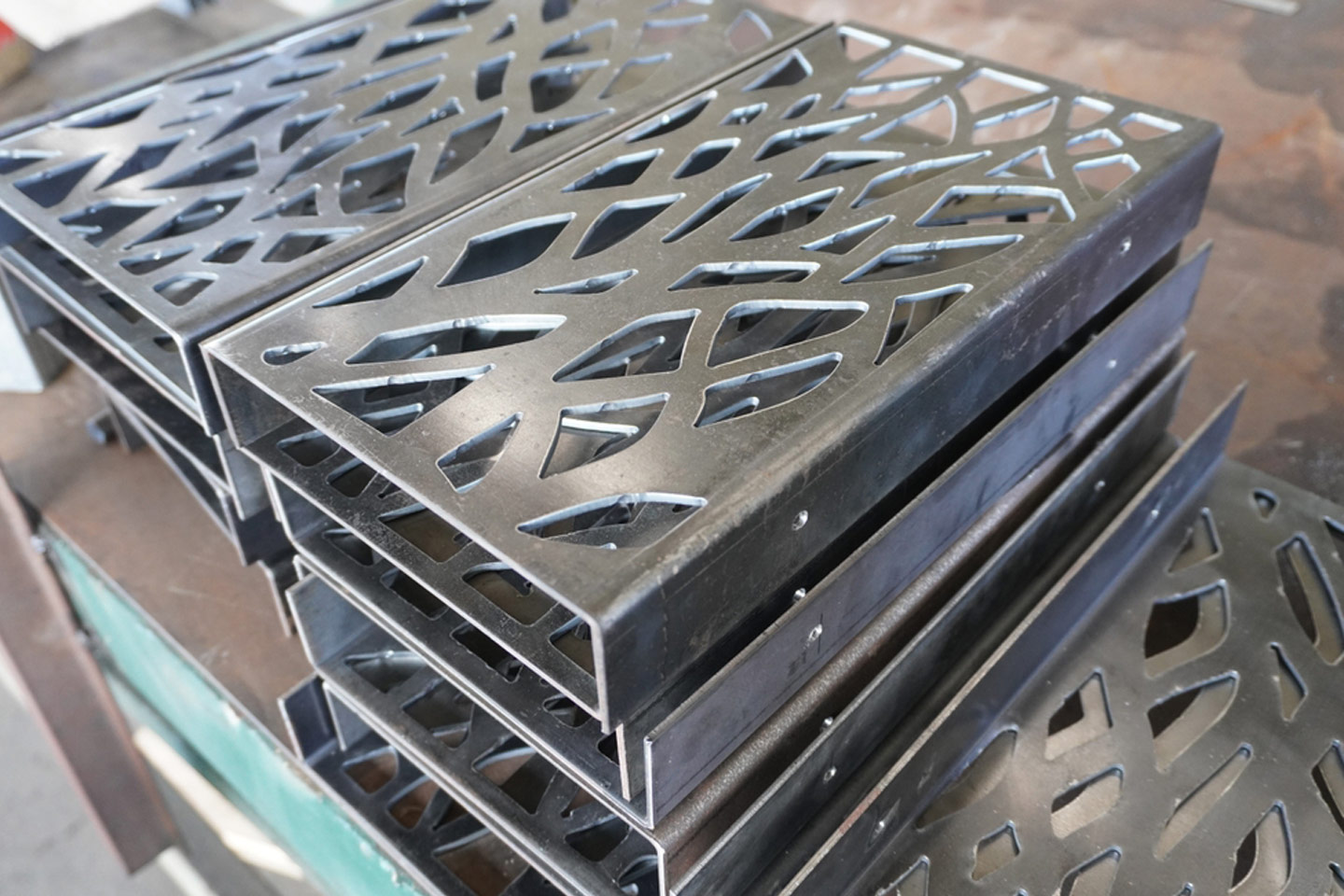
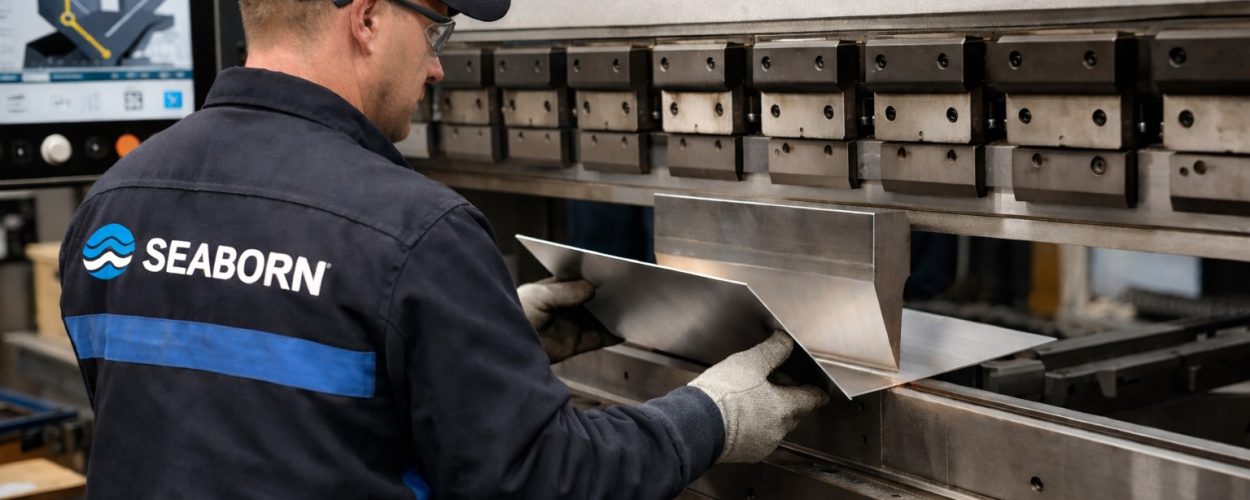
Sheet Metal Bending Services Ontario, Canada
-
High Accuracy CNC Press brakes with Precision ground tooling for accuracy
-
Segmented tooling to accommodate most sheet metal parts
-
Forming / Welding / Machining / Assembly all under one roof
Materials for Sheet Metal Bending
| Feature | Expected Tolerance |
|---|---|
| Hole to hole locations on single face | Material /-0.001" or 0.02mm |
| Material Thickness | Metal gauges overlap on thickness. The range of heavier gauge materials is more than light gauge material. 14GA is 0.0697 to 0.0797 & 7GA is 0.1703 to 0.1883. |
| Bend length Tolerance Over One bend | With out adding cost you can expect a single bend in gauge metal to +/- 0.015" (0.4mm) accurate. If you need it and can afford the cost increase 0.005" (0.13mm) is possible but will noticeable effect cost. |
| Bend Tolerance Over Mutiple Bends | With-out adding significant cost you can expect a single bend in gauge metal to +/- 0.030" (0.8mm) accurate. If you need it and can afford the cost increase 0.015" (0.4mm) is possible but will have a noticable cost effect. |
| Bend Angle Tolerance | The common bend angle tolerance is plus minus 1 degree with plus minus a 0.5degree being possible on shorter parts. Bend tolerance can be held to one degree on longer parts but does drive up part cost. |
| Features | Holes and slots etc should be expected to be distorted and stretched when near to bend line. Keeping 5 time material thickness away from the bend line is a good practice. |
| Ends by Bends | The ends of formed sheet metal should be expected to bulge out making a small point. |
| Minimum Bend Length | We would like to see this be 8 times material thickness, but can work with as little as 4 times material thickness. Material on both sides of the bend line needs to be supported by the die set. |
Materials for Sheet Metal Bending
Aluminum Sheet Metal Bending
-
Sheet metal and for forming most commonly is 5052-H32
-
6061-T6 can not be cold formed
-
3003 is largely out dated
Steel Sheet Metal Bending
-
For thin gauge material commonly A36, 1010
-
For Plate thickness 44W / 50W or 300W / 350 W
Galvanized Steel Sheet Metal Bending
-
G90 is the only common grade of galvanized sheet metal
Copper and Brass Sheet Metal Bending
-
Picking the correct copper and brass for your project can be challange.
Material properties have a wide range and availability can swing quickly.
Design Considerations for Forming Sheet Metal / Sheet Metal Bending
Understanding a Press Brake
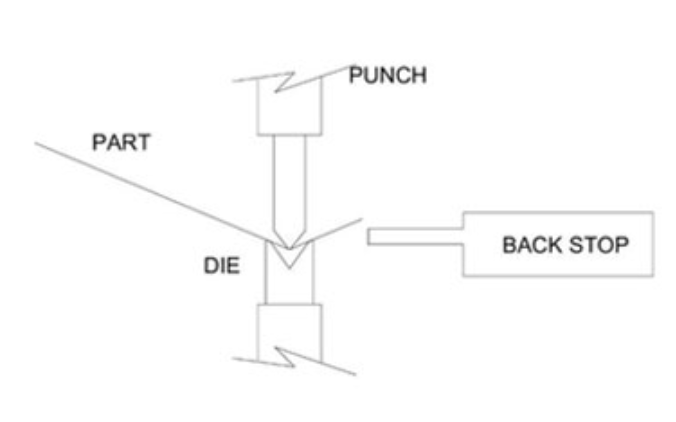
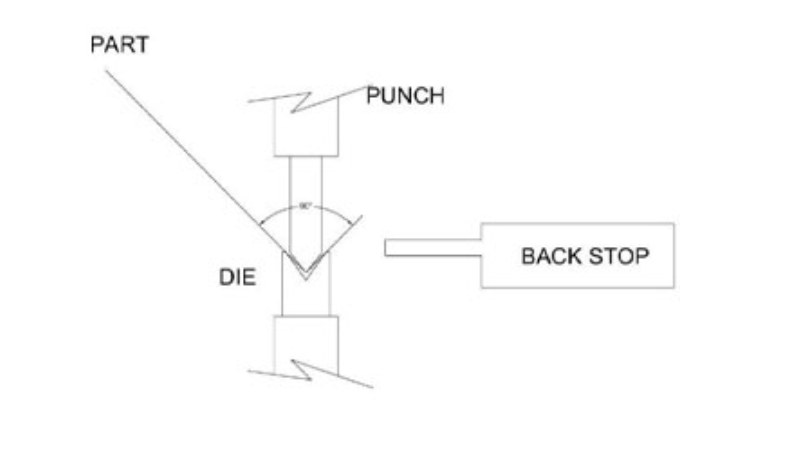
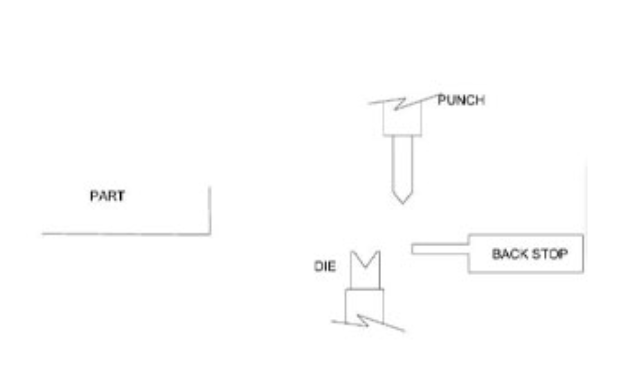
The ram of the press brake carrying the punch typical comes down towards the part / blank being formed.
The depth the punch travels down into the die determines the bend angle
Once the part is formed to the desired angle the ram retracts up and the part maybe pulled out.
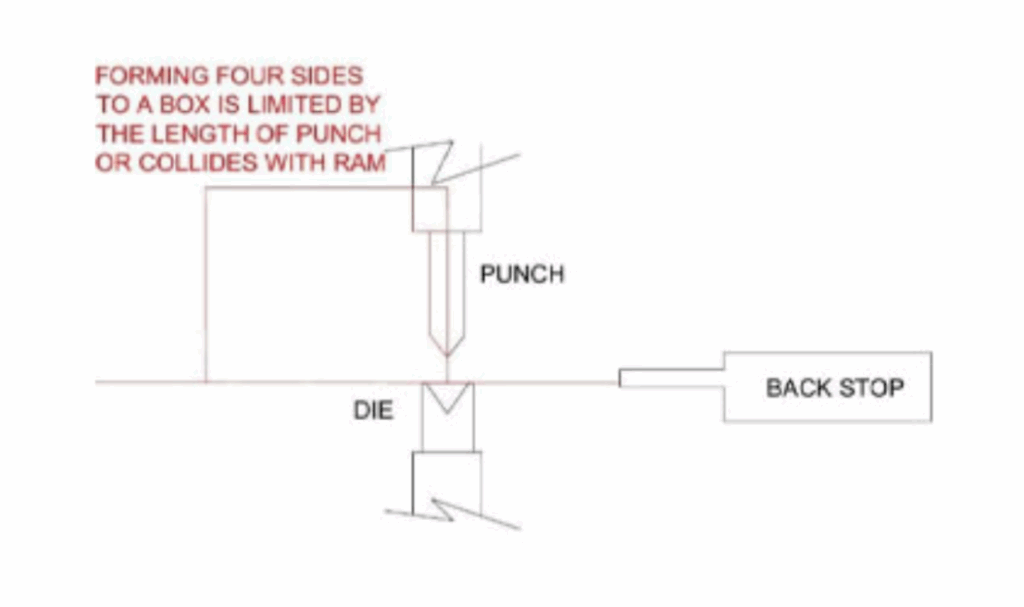
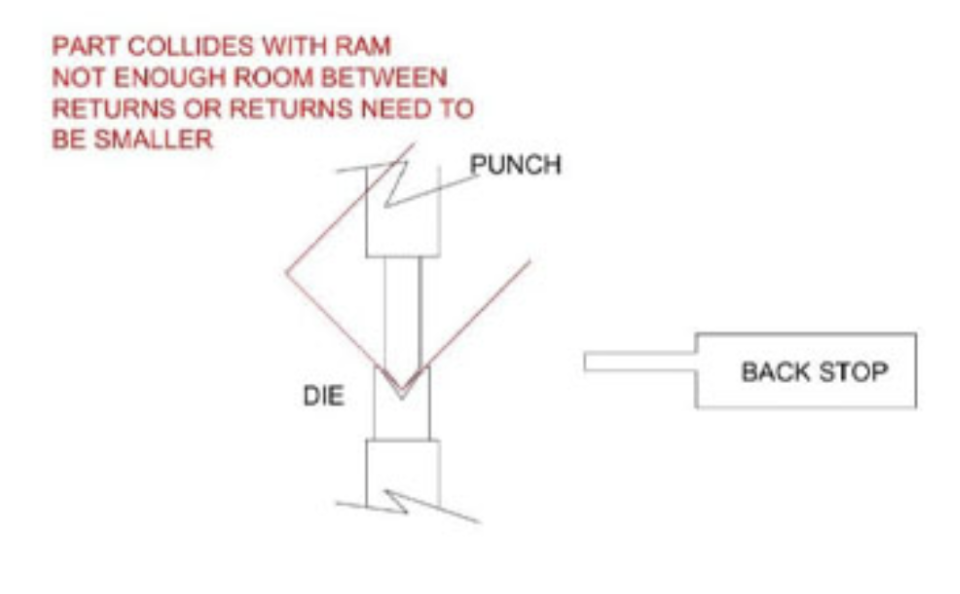
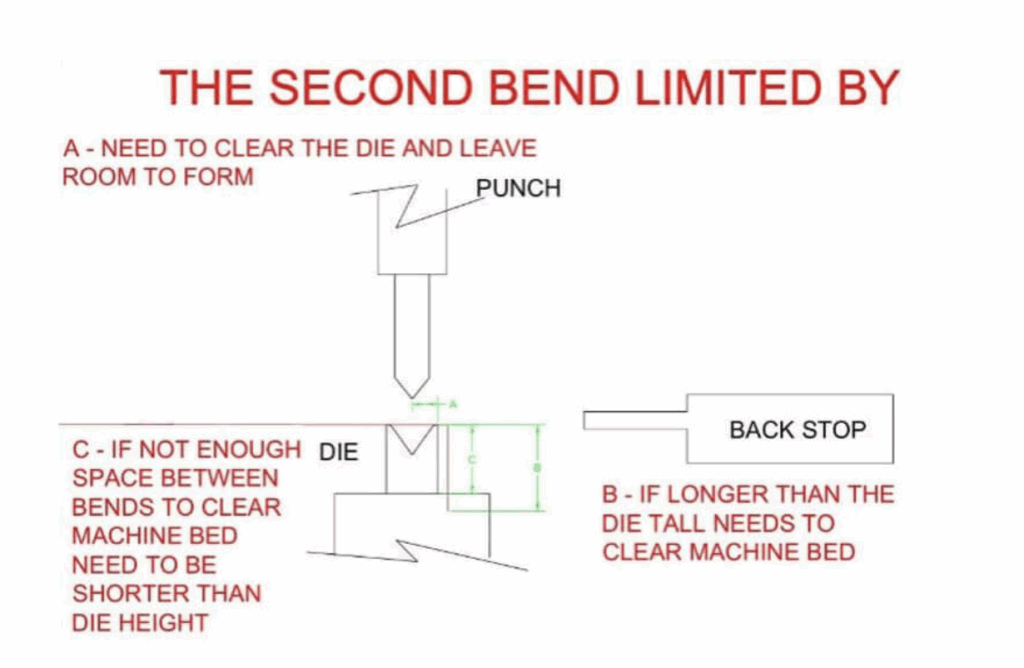
Avoiding Collisions When Bending Sheet Metal
-
Your design should allow for a die opening of at least 6 times material thickness and 8 times material thickness is preferred.
-
Forming Sheet metal can deform features in the blank.
-
Holes and countersinks should be at min 4 times the material thickness plus an allowance for the bend radius away for the bend line
-
Slots (other cut outs) should be kept 8 times the material thickness away from the bend line.
Other Design Considerations For Forming Sheet Metal
-
When a corner with a chamfer or fillet is near the bend line and between the die opening it will not bend fully
-
Spring back on common steel alloys can be 3 to 6 degrees. Some common alloys can spring back as much as 30 degrees. Allowances for the tooling to be able to form the parts need to be considered.
-
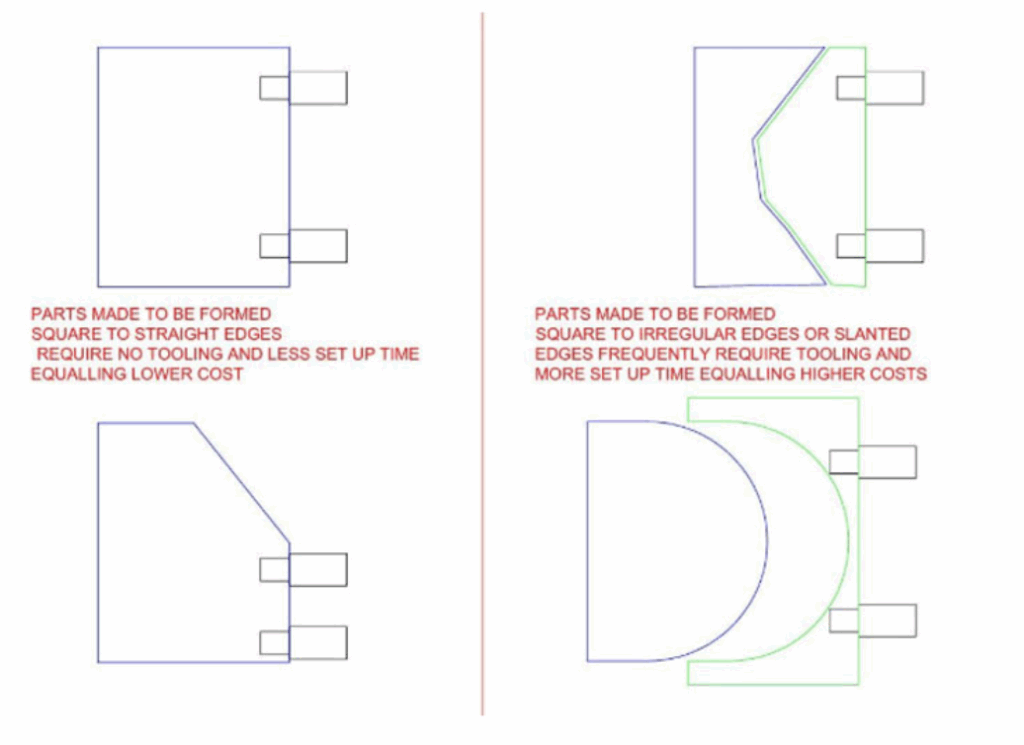
Forming parts off an irregular edge or at odd angle adds cost quickly in set up time and tooling. See figure 7 below
Why Choose Seaborn Manufacturing for Sheet Metal Bending Services?
-
For work done right and fully to your specifications.
-
Backed by CWB 47.1 & 47.2 Welders
-
All first off parts are double inspected and all inspections are tracked.
-
Capable to ramp up quickly to your production demands
Sheet Metal Bending Services in Ontario and Canada
Sheet Metal Kitchener
Sheet Metal Waterloo
Sheet Metal Cambridge
Sheet Metal Toronto
Sheel Metal London
Sheel Metal Windsor
Sheel Metal Ontario
Sheet Metal Bending FAQ
- Sheet metal bedding services are simply the forming of the sheet metal
- Generally we are limited to consistent bends along a straight line
- This is how most your formed sheet metal parts such as brackets and panels go from a flat blank to a production ready part
- Sheet metal is laid across the top of a die with a V opening.
- The press brake forces the sheet metal down into a V shaped die with its punch.
- Deeper into the V die the press goes the more the sheet metal bends up on either side of the punch
- The CNC controller controls the depth the punch travels to and there by the angle of the bend
- Press brake also control back stops that determine where on the sheet the bend will be.
Aluminium Sheet Metal Bending, Steel Sheet Metal Bending, Galvanized Steel Sheet Metal Bending, Copper and Brass Sheet Metal Bending
We focus on bending metals 20ga to ¼” for the bulk of our business. After ¼ the length of the bend decides how much thicker we can go.
We do not prefer prototype only work. We do take on prototypes that will lead to production work. We do offer small production run services.
Typically a single bend would be accurate to plus minus 0.015” (0.4mm) and within 1 degree.
We offer a full range of services after bending including welding and finishing the parts.
- Bend radius will almost never match the material thickness.
- The bend radius is determined by the radius on the face of the punch and the width of the die opening
- For the majority of jobs we do not suggest you get caught up or specify the bend radius. We will make parts and will tool press brakes appropriately for the material.
- When you need a radius for a specific look this typically will reduce part accuracy and increase part cost.


