(CNC) Tube Bending Services Kitchener
-
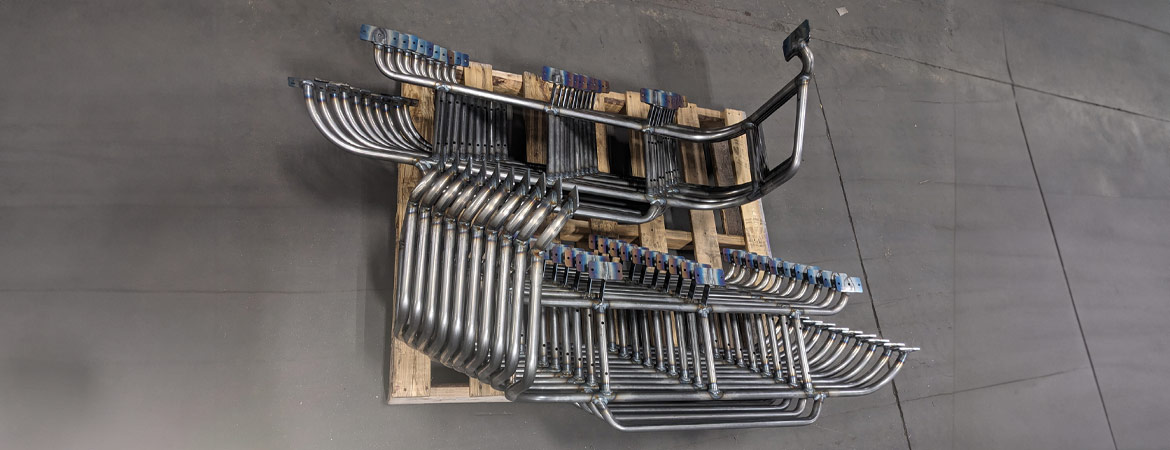
Precision CNC tube bending for the accurate bending of you complex tube needs
-
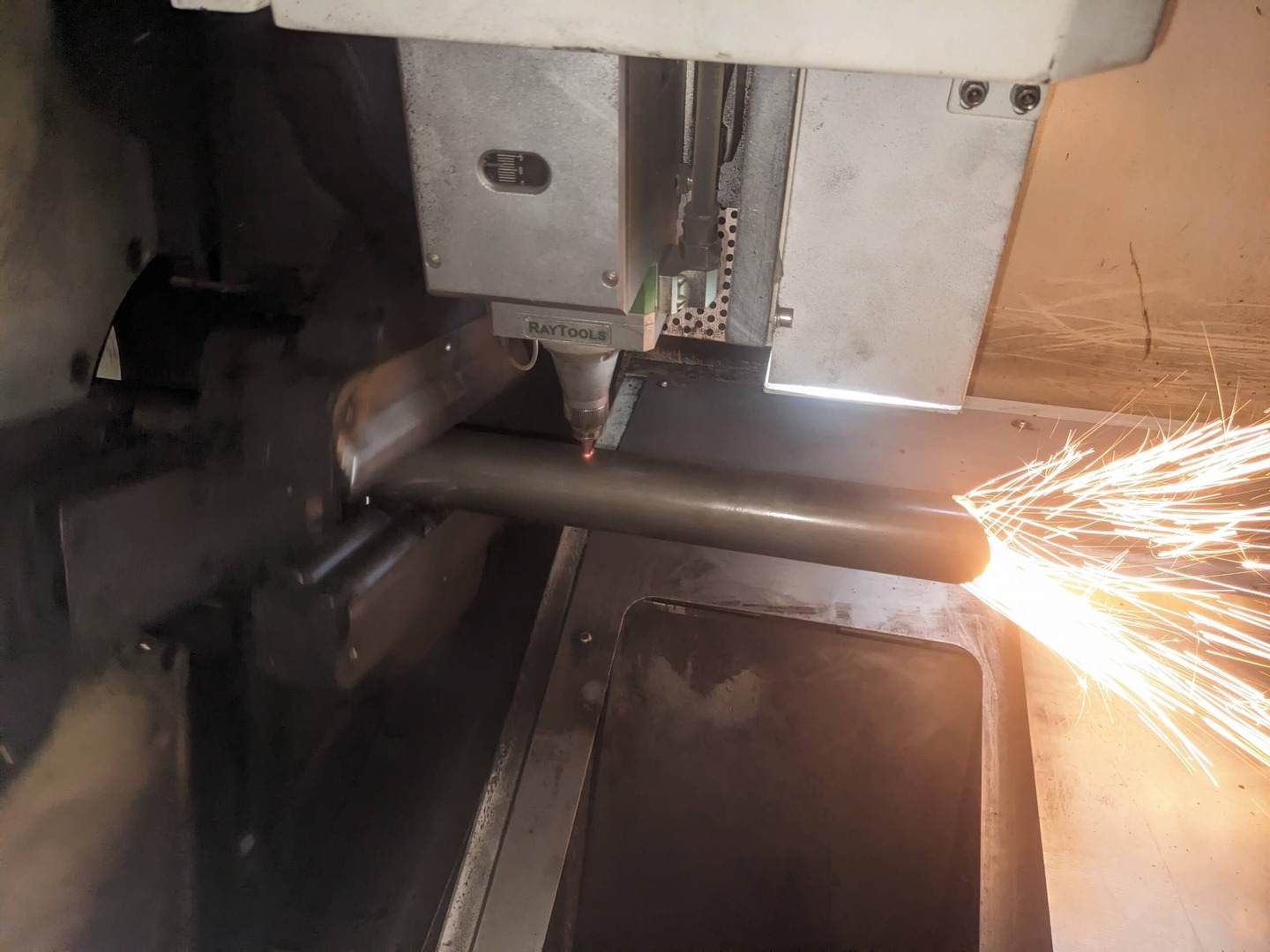
Fast turn around supported by an in house tube laser and full welding services
-
Proven capability with forming structural grade tube
-
Flexible tube bending services for production and repeat OEM work
Our CNC Tube Bending Services in Kitchener-Waterloo
Custom Tube Bending
Production Tube Bending
Rod Bending
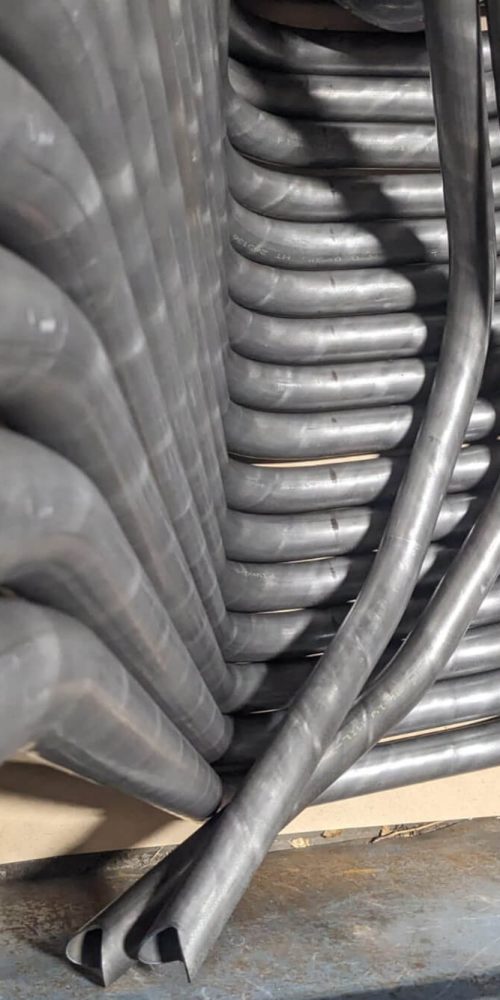
Square and Round Tube bending
Stock Dies
Tube Bending Capabilities and Technical Specifications
Serving Kitchener, Waterloo manufacturers, Seaborn Manufacturing provides CNC tube bending supported by a large range of stock tooling and equipment. Our facility is designed to minimize lead times while maintaining flexibility to accommodate new projects. Whether your requirement is short run production or repeating orders our Tube Bending Kitchener service ensures reliable part delivery. Seaborn for all your tube forming needs in Waterloo region. Our stock dies sets with centerlines are listed below.
Seaborn Stock Bending Dies
We have stock dies as follows with Center Line Radius as shown. These die sets may all be used on Aluminum, Steel or Stainless Steel. If you do not see a mandrel listed for a wall thickness you want these are only $150 -200 typically and ot required for many jobs in particular with heavier walled Tube.
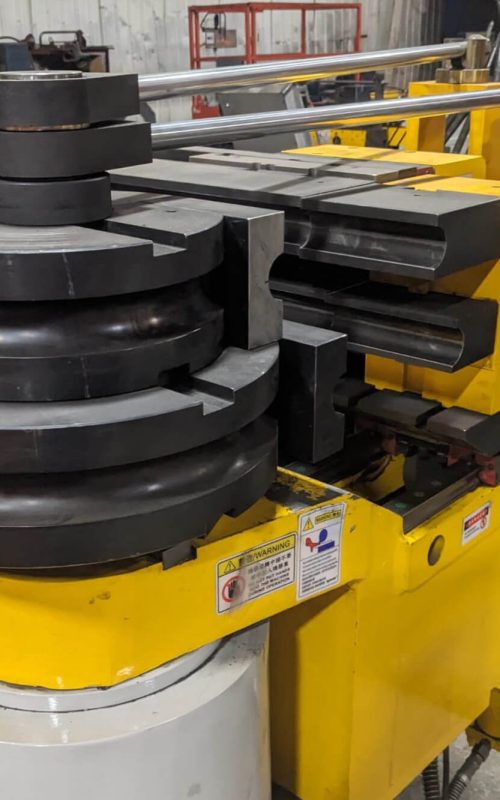
We have stock dies set for ¾” to 2” Pipe. Our machines are capable of bending up to and including 3” diameter tube. The min radius we can bend is approximately 50mm with our current tooling posts. New dies sets for a single radius typically cost between $3,000 and $5,000.
| Square Tube Die Sets |
|---|
| ¾″ square tube — 65 mm centreline radius |
| ¾″ square tube — 76 mm centreline radius |
| ⅞″ square tube — 1.81″ centreline radius |
| ⅞″ square tube — 67 mm centreline radius |
| 1″ square tube — 1.75″ centreline radius; mandrel for 0.065″ wall |
| 1″ square tube — 2.00″ centreline radius; mandrel for 0.065″ wall |
| 1.75″ square tube — 5.375″ centreline radius; mandrel for 0.083″ wall |
| 2″ (50.8 mm) square tube, 0.083″ (2.11 mm) wall — 5.5″ (139.7 mm) centreline radius |
| Round Tube and Pipe Die Sets |
|---|
| ¾″ diameter tube — 60 mm centreline radius |
| ⅞″ diameter tube — 1.811″ centreline radius |
| ⅞″ diameter tube — 2.2″ centreline radius |
| ⅞″ diameter tube — 5.12" centre line radius |
| 1″ diameter tube — 60 mm centreline radius |
| 1.25″ diameter tube — 70 mm centreline radius; mandrel for 0.065″ wall |
| 1.5″ diameter welded tube — 4.0″ centreline radius; mandrel for 0.065″ wall |
| 1.5″ diameter welded tube — 5.0″ centreline radius; mandrel for 0.065″ wall |
| 1.75″ diameter tube — 2″ centreline radius; mandrel for 0.095″ wall; limited to approximately 20–30° bends |
| 1.75″ diameter tube — 6″ centreline radius; mandrel for 0.095″ wall |
| 1.75″ diameter tube — 8″ centreline radius; mandrel for 0.095″ wall |
| 1.5″ nominal pipe (1.900″ OD) — 3.9″ centreline radius; mandrels for Schedule 10 and Schedule 40 |
| 1.5″ nominal pipe (1.900″ OD) — 5.9″ centreline radius; mandrels for Schedule 10 and Schedule 40 |
| 2″ diameter tube — 5.0″ centreline radius; mandrels for 0.065″ and 0.125″ walls |
| 2″ diameter tube — 6.0″ centreline radius; mandrels and wipers for 0.065″ and 0.125″ walls |
| 2″ nominal pipe (2.375″ OD) — 5.2″ centreline radius; mandrels for Schedule 10 and Schedule 40 |
| 2″ nominal pipe (2.375″ OD) — 7.5″ centreline radius; mandrels for Schedule 10 and Schedule 40 |
| Programmable Radius Tube Bending Tooling |
|---|
| Programmable radius tooling is available for the tube sizes listed below and is intended for large radius CNC bending. As a general starting point, bend radii are approximately eight times the outside diameter for round tube and 10 to 12 times the outside dimension for square tube. Feasibility and repeatability depend on the material, wall thickness, bend angle and complete part geometry. Fixed radius tooling is preferred when closer dimensional control or higher repeatability is required. |
| ¾″ diameter tube |
| ¾″ square tube |
| ⅞″ diameter tube |
| ⅞″ square tube |
| 1″ diameter tube |
| 1.25″ diameter tube |
| 1.5″ diameter tube |
| 1.75″ diameter tube |
| 1.75″ square tube |
| 2″ diameter tube |
Why Choose Seaborn Manufacturing for Tube Bending
-
Advanced CNC tube bending equipment capable of forming complex parts
-
Integrated manufacturing including tube laser, robotic welding, and machining
-
Strong experience with structural and OEM fabrication requirements
-
Your Local Kitchener-Waterloo supplier
Materials of Our Kitchener-Waterloo Clients Used for Tube Bending
Steel Tube Bending Kitchener-Waterloo
Steel remains the most widely used material for Tube Bending Kitchener applications. From standard grades such as ASTM A1011 and 44W to high-strength alloys like 4130 and 4140, steel tubing is used for structural and mechanical applications. You see it in everything from equipment frames and safety devices to furniture, making it the backbone of many fabricated assemblies.
Stainless Steel Tube Bending in Kitchener
Stainless steel does well in tube bending when handled correctly. It is commonly selected for its corrosion resistance and visual appearance in exposed applications. In the Kitchener , Waterloo manufacturing region, stainless tubes are often used in equipment, and enclosures, for food or chemical handling.
Aluminium Tube Bending in Kitchener-Waterloo
Aluminum tube bending requires careful material selection. The most common grade of aluminum tube is 6061-T6 and is not suitable for forming, or tube bending. For your Kitchener tube bending projects, we focus on sourcing the correct aluminum grades such as 6063-T5. Our fabrication facility in Waterloo is ready for all your tube bending needs.
Wall Thickness and Tube Bending
At Seaborn we prefer working with slightly thicker walled tubes. It is much easier to form a tube with a 3mm ( ⅛”) wall than one with a 2mm 0.08” wall. The tubes hold their shape better and form far easier.
Square Tube Bending Waterloo
Square tube bending adds another level of complexity and consideration. For many projects the tube’s inner and outer wall collapsing to the center may be acceptable. For those that need a cleaner appearance controlling the tube wall requires the right tooling and a lot of tube bending expertise. Our Waterloo based tube bending service has a lot of experience with forming square tubes.
Tube Bending Applications Across Industries
Tube Bending in the Kitchener-Waterloo area is especially popular in these local industries:
Manufacturing Equipment
Automotive and Transportation
Construction and Structural Applications
Energy and Power Systems
Furniture
Goals and Benefits of Professional Tube Bending
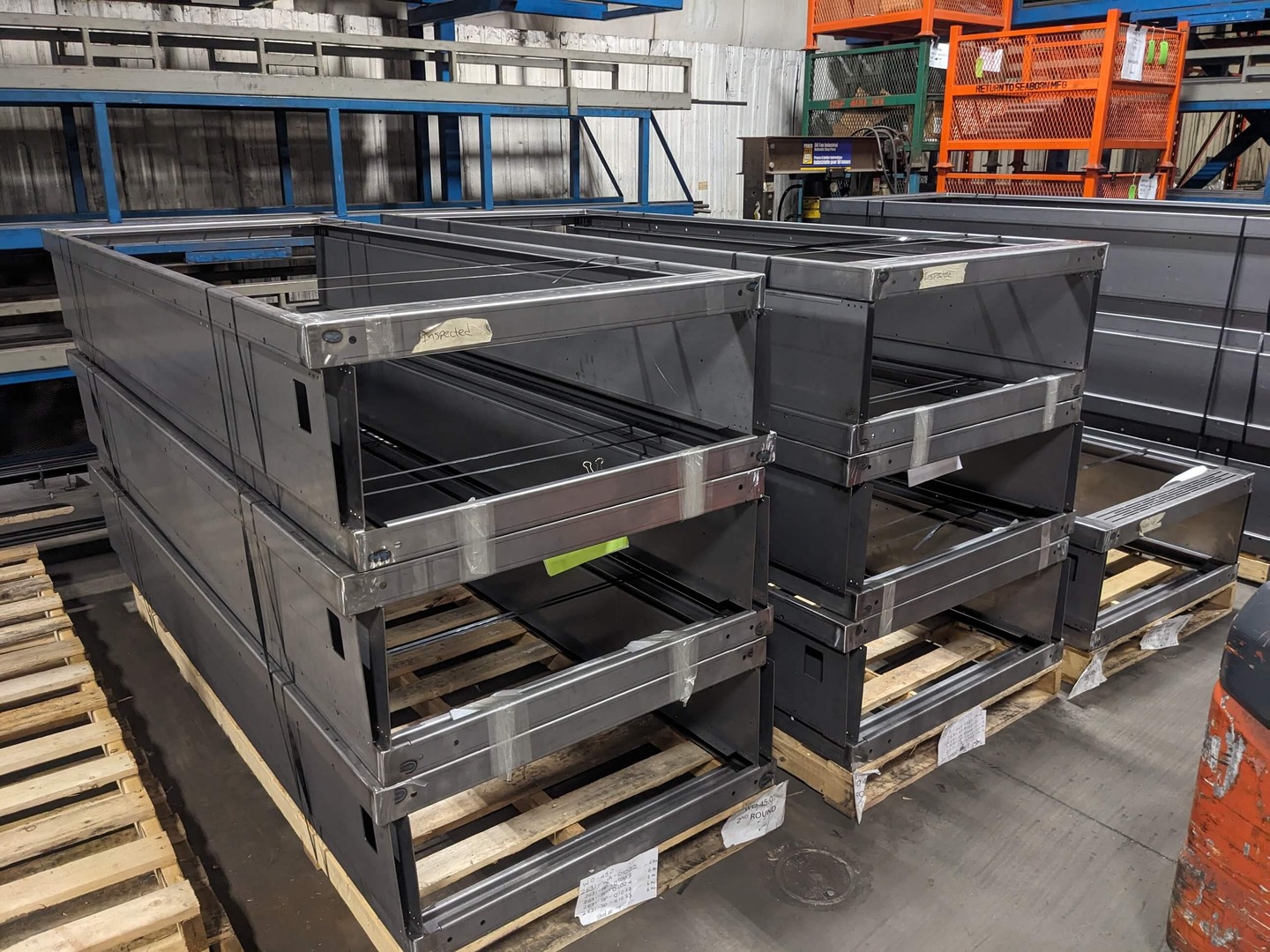
When you work with Seaborn Manufacturing, you are getting more than cnc tube bending. You are getting a complete fabrication solution and manufacturing partner. Our Tube Bending Kitchener services are complemented by our tube laser, and robotic welding. Our goal is to deliver the fabricated components that keep Kitchener Waterloo Manufacturers leading the way. When working with Seaborn Manufacturing you benefit from reduced shipping, improved part fit, and faster project completions. With experienced tradespeople and advanced equipment, we ensure your parts meet performance and quality expectations at every step of the way.
Tube Bending Services FAQ
We provide CNC tube bending for various materials including steel, aluminum and stainless steel.
CNC tube bending base line and generally the most cost effective tolerance would be to follow the perfect part path within an ⅛” or 3mm. This is for a part with multiple bends on different planes. The end position of tube bending and even the travel path can be held to tighter tolerances but cost will go up. We frequently hold the tube end position to end position to better than 1.5mm / 1/16”.
Minimum bend radius depends on multiple factors such as wall thickness, material and tube size. As a general rule, tighter radii bending requires more tooling and has a higher failure rate. . At Seaborn Manufacturing, we regularly work with radii down to approximately 2.5x–3x tube diameter depending on the application, while maintaining part integrity. Avoiding the min is better when it is possible.
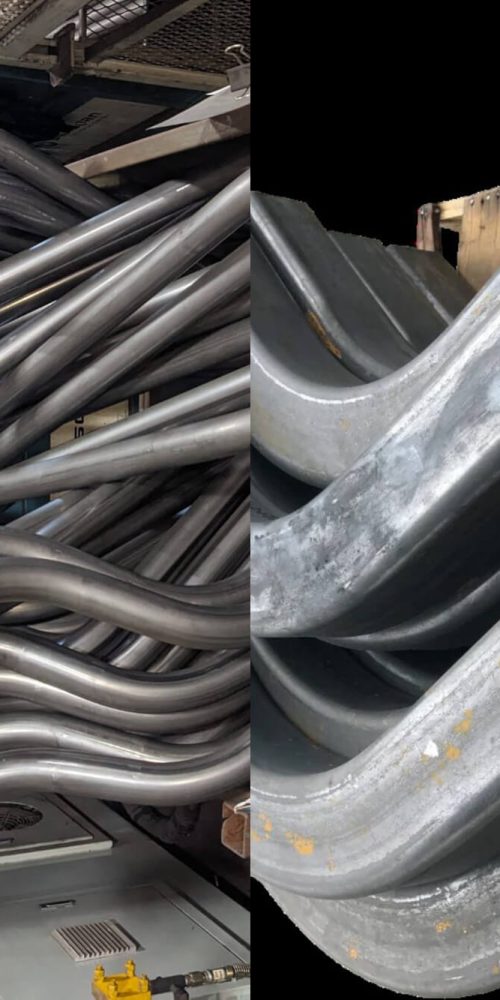
Yes and to a limit. Multi plane bending is a core capability of our CNC tube benders. They all can rotate the tube between bends. All our production tube benders are also double stack benders, this means they can carry two bend radii at the same time. The dies should be made together to be used in this manner. We also have the ability to use programmable bend radius but these take far more set up and development on every new lot of tube and are limited to roughly 12 times the tube diameter for a centerline radius.
To quote accurately, you should provide a dimensioned and toleranced drawing. For quoting a PDF is ideal. Make sure to include the material, tube size, wall thickness and quantity being ordered in each release. If you are buying thousands annually let us know but for most jobs the release quantity will set the price.
The perfect tube bend drawing would provide the center the distance for the start of each bend and the distance from the end of the last bend to the start of the next bend. The centerline radius of the tube as used in the drawing. How much the tube is rotated between bends if all bends are not flat on a single plain.
For our tube benders the min straight section from the end of one bend to the start of the next is 3.25” to allow for the tube benders clamp. As the tube gets larger and also as the bending radius gets larger the straight section needs to become longer. Typically the straight section between bends should not be less than 3.5 times the tube diameter.
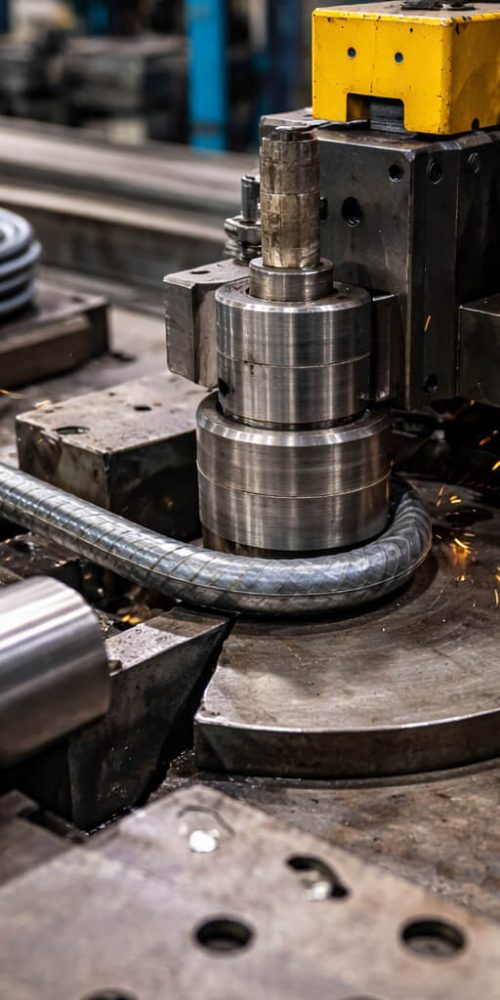
Tube bending is the forming of tube around a central die while encapuslating the tube so it maintains its profile.
Tube bending most commonly is for mild steel. Stainless is well suited to tube bending and some grades of aluminum bend well. Copper, Inconel alloys, and many exotics are and can be used in tube bending.
Same as every job. Tooling cost need to be addressed first if stock tooling can not be used. After that is set up time to instal tooling and prove the first formed parts. Scrap cost of parts expected to be lost in set up. Then finally the run cost per part. The cost per part does not change throughout a run but how many pieces the initial costs are amortized over has a big effect on piece price.